There was a time when boredom meant staring out a window, lost in thought. Now, the second an idle moment creeps in, we reach for our phones—scrolling, tapping, consuming. It happens almost instinctively, like a reflex we never meant to develop. But have you ever noticed how hard it is to stop? You pick up your phone for something specific, and suddenly, you’re ten minutes deep into a random video thread, doomscrolling through news updates, or clicking on posts you don’t even care about.
This isn’t just a personal struggle. It’s by design. Our focus has become a commodity, and tech companies, advertisers, and content platforms are in an all-out battle to capture and monetize it. Welcome to the attention economy—a world where our ability to focus is being hijacked, fragmented, and sold to the highest bidder.

The Rise of the Attention Economy
The attention economy isn’t a new concept, but it has become more aggressive than ever before. Coined by economist and psychologist Herbert A. Simon in the 1970s, the term refers to the idea that human attention is a scarce and valuable resource. In today’s digital landscape, tech companies, advertisers, and content creators are all competing for one thing: your time.
Every time you get a notification, refresh a feed, or see a new headline designed to spark outrage or curiosity, you’re engaging with an economy that thrives on keeping you glued to screens. Social media platforms like TikTok, Instagram, and Twitter are highly sophisticated ecosystems designed to maximize engagement. Algorithms track what you like, what makes you linger, and what keeps you scrolling. The longer you stay, the more ads they can show you, and the more profit they make.
And it doesn’t stop there. Companies optimize every digital experience to capitalize on your attention. Autoplay features ensure you never stop watching, infinite scroll prevents a natural stopping point, and targeted content keeps you in a loop of hyper-personalized engagement. These platforms go beyond responding to our habits—they actively shape them, conditioning us to crave constant digital stimulation.
How Technology is Hijacking Our Focus
It’s not just about social media. The very design of our digital world makes it difficult to focus for long periods. Ever noticed how websites and apps constantly update? The never-ending stream of content means there’s always something new to consume, preventing our brains from fully processing or retaining information. Push notifications, pop-ups, and infinite scroll features are all engineered to keep you engaged, even when you have other things to do.
Studies show that excessive screen time—especially on fast-paced platforms like TikTok—can reduce our ability to concentrate. According to research published in Nature Communications, people’s attention spans have significantly declined over the past two decades. The study found that people now switch topics and lose focus faster than ever before, driven by the overwhelming amount of content we are exposed to daily.
Even beyond social media, the way we interact with news, entertainment, and communication has fundamentally shifted. The rise of short-form content, whether in the form of tweets, YouTube Shorts, or Instagram Reels, has trained our brains to expect quick bursts of information rather than deep engagement. When was the last time you read an entire article without checking your phone or getting distracted?
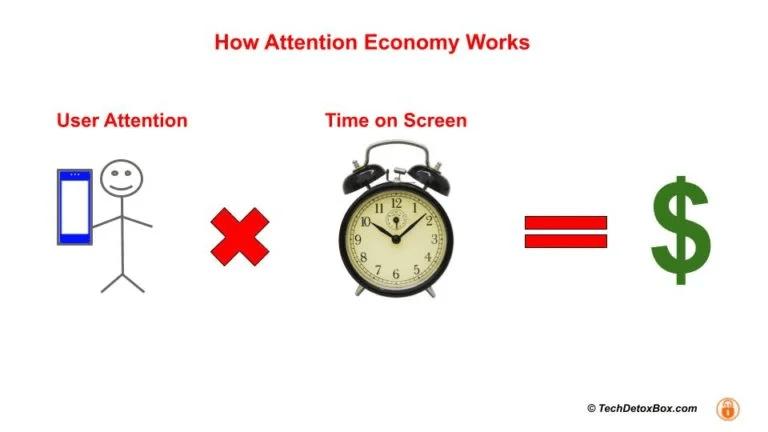
More concerning is how tech companies monetize this distraction. Platforms like YouTube and Instagram don’t just want you to watch—they want you to stay. The longer you engage, the more ads you see, and the more valuable you become to advertisers. This creates an environment where grabbing and holding your attention is the highest priority, even at the expense of your focus, mental well-being, and productivity. In essence, we are being conditioned to crave constant novelty, making it harder to engage in meaningful, sustained thought.
The Psychological Toll of Constant Distraction
Our inability to focus isn’t just an inconvenience—it’s affecting our mental health and productivity in ways we don’t always recognize. Studies have linked the constant influx of digital stimulation to increased stress, anxiety, and even symptoms of ADHD. The dopamine-driven feedback loops created by social media reward short-term engagement at the cost of long-term cognitive development.
Think about it: when you’re constantly switching between apps, notifications, and tasks, your brain is never fully at rest.
This fragmented attention makes it harder to engage in deep work—whether that’s studying, working on a creative project, or even just having a meaningful conversation.
You might find yourself reaching for your phone at the slightest hint of boredom, reinforcing the cycle of distraction.
On a societal level, this lack of focus has real consequences. When we can’t concentrate for long enough to read in-depth journalism, analyze complex issues, or engage in deep conversations, it makes us more susceptible to misinformation and surface-level thinking. If we’re only consuming bite-sized content, how much critical thinking are we really doing?
Even in our personal lives, the effects are profound. Have you ever been in a conversation where someone is half-listening while scrolling through their phone? Our relationships, too, are suffering from this fragmented focus. Meaningful connection requires presence, but when our attention is constantly being divided, we lose the depth of engagement that makes interactions fulfilling.
Can We Reclaim Our Focus?
The good news: awareness is the first step toward change. While it’s unrealistic to completely disconnect from digital life, there are ways to regain control over your attention:
- Be intentional with your screen time. Instead of mindlessly opening an app, set a purpose before you start scrolling. Ask yourself: What am I here to do?
- Turn off non-essential notifications. The fewer interruptions, the better. Do you really need to know every time someone likes your post?
- Practice deep work. Set aside distraction-free time to focus on a single task. The Pomodoro Technique—working in 25-minute intervals with short breaks—can help train your brain to sustain attention.
- Engage in offline activities. Reading physical books, taking walks without your phone, or even just sitting in silence can help rebuild your ability to focus.
- Be mindful of algorithmic manipulation. Recognizing that platforms are designed to keep you addicted can make it easier to break the cycle.
Another strategy is to reclaim boredom. In a world where we can instantly entertain ourselves with a single tap, boredom feels like an inconvenience. But boredom is where creativity thrives. It’s in those quiet moments that new ideas form, that we reflect on our experiences, and that we develop deeper connections with the world around us.
The Future of Attention
The fight for our attention isn’t slowing down. With the rise of AI-generated content, even more sophisticated algorithms, and the ever-growing pressure to stay connected, our ability to focus will continue to be challenged. But the ability to concentrate, to think deeply, and to engage meaningfully with the world is too important to lose.
So, the next time you catch yourself falling into a mindless scroll, take a moment to pause. Your attention is valuable—don’t give it away so easily.


 Quill & Conscience
Leave a reply to Harsha Cancel reply