

In today’s competitive landscape, STEM education is often seen as the key to practical careers and financial success. However, this perspective overlooks the invaluable contributions of humanities education. In this blog post, we’ll explore why humanities matter and how they complement STEM fields.
In our capitalistic society, STEM education has become synonymous with career success and financial stability, leading to a significant increase in STEM majors. According to the Wall Street Journal in 2023, humanities majors have decreased by over 30% in the past decade, dropping to just 4% in 2020. This trend is driven by the belief that STEM fields offer more secure career paths due to the high demand for technological expertise.
In this context, we must ask: What is the value of studying the humanities—subjects like philosophy, literature, and history?
In an age where STEM education often takes center stage, it’s essential to recognize the enduring significance of the humanities, as it represents the essence of human society, delving into areas beyond STEM’s grasp. STEM and humanities involve largely different ways of thinking. According to the University of Nebraska-Lincoln’s paper in 2020, STEM-minded thinkers tend to foster “critical thinking, logic, and practicality,” while those in humanities “reinsert…human need, desire, creativity, aesthetics, and vulnerability” into society.
STEM presents cold, hard facts and truths. Humanities, on the other hand, question the intangible. While science addresses the physical aspects of what we are, humanities prompt us to explore the emotional and philosophical dimensions of humanity that involve more questions than answers.
STEM equips individuals with the problem-solving skills needed to improve the world, but at the same time, humanities are the colors we use to paint a view of our shared human experience, providing crucial insight into aspects of the community that science cannot always offer.
So before you decide to focus solely on a STEM career, consider the benefits of integrating humanities into your education. Embrace the value of a multidisciplinary approach for a more fulfilling and impactful career.
The Student Perspective (coming from a high school student)
Personally, it’s disheartening to see how many of my friends and classmates dismiss the humanities for STEM when making any decisions regarding academics.
Recently, Dougherty Valley High School in California conducted an online poll taken by 600 high school students showing that 71.3% of students wanted to pursue a pathway in STEM while only 21.7% wanted to pursue a humanities education. The popular inclination towards STEM fields is not only influenced by societal pressures, but also the notion that pursuing subjects such as science, technology, engineering, or math offers more direct pathways to successful and financially rewarding careers.
I remember asking one of my friends (we were only freshmen), whose writing skills surpass any that I’ve seen, about her plans for the future. Understandably, she wants to major in pre-med and eventually become a doctor.
I asked her, “But what about your writing skills?”
She responded, “Yeah….well, we all know that I can’t really go anywhere with that. Like, what am I gonna do? Survive with measly earnings and live off the hope that my writing goes viral someday…?”
Honestly, the fact that we, as high schoolers, have such strong ideas about our future careers is so confining. The entire competition with having to identify our future path and pursuing what have to be phenomenal activities related to it all throughout high school just to get into a good college is crazy itself (but that’s a topic for another time).
In reality, humanities-related skills are so incredibly rewarding and applicable to STEM fields. But the other side that most people often overlook is how all the professions in the social sciences are what have built and established our country. Lawyers, journalists, public policy-makers—I personally find humanities-oriented people to be the best people to have great conversations with.
There are many who argue that since STEM is a much more practical path, it deserves more funding and focus in schools than the humanities. This perspective derives from the fallacy that the humanities lack direct real-world relevance or progression. This is, in fact, an utter lie. Not many acknowledge the pivotal role the humanities play in nurturing essential life skills, such as communication and ethical decision-making.
While STEM subjects may build strong foundations in quantitative analysis, studying the humanities fosters strong critical thinking and communication skills. Writing an essay, giving a presentation, or debating a social issue, is a skill that humanities demands, necessary for success in higher education and beyond.
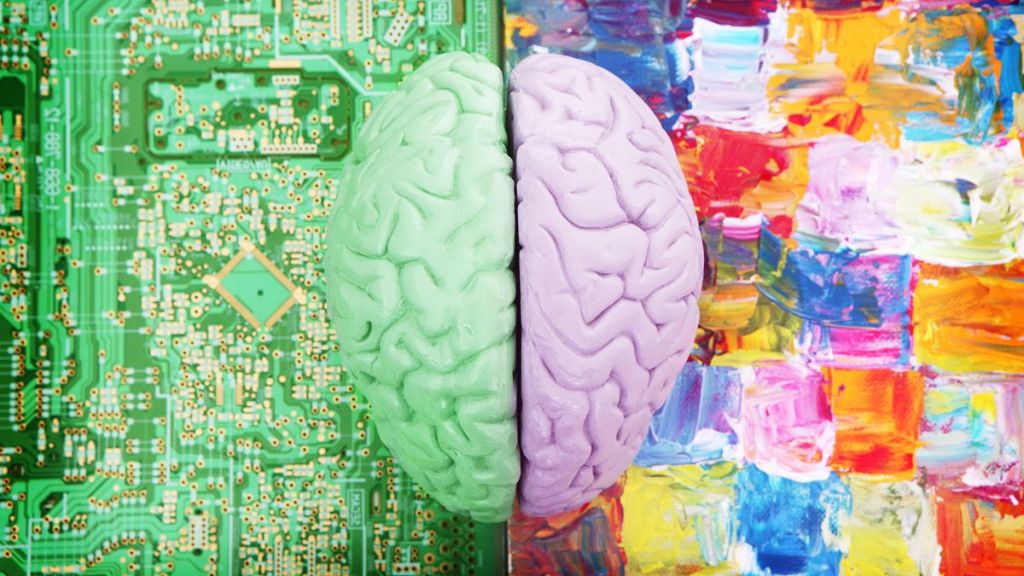
An Interdisciplinary Approach Needs to be Implemented
An interdisciplinary approach that seamlessly integrates STEM and humanities education from high school offers unique opportunities. By exploring diverse perspectives in the humanities, students will be encouraged to think critically and creatively, allowing them to develop groundbreaking solutions to real-world challenges within areas of STEM. This merge of ideas leads to the creation of technologies and advancements that consider human needs within technological contexts, ultimately enhancing their relevance and impact.
Concrete examples from the U.S. Department of Education demonstrate how “collaborations between STEM and humanities were crucial to some of the largest breakthroughs.” One such instance is the area of human-robot interaction, where engineers and computer scientists partner with psychologists and sociologists. This collaboration has improved robots to better understand and engage with humans, revolutionizing industries from healthcare to customer service. Another collaboration highlighted by the department can be found between archaeology and technology, where archaeologists collaborate with experts in advanced technologies to unearth ancient civilizations and historical sites.
It is this type of collaboration needed, with interdisciplinary teamwork, to contribute to the compendium of human knowledge.
In today’s dynamic world, the relationship between STEM and humanities is a testament to the lengths of societal progress. The key to a far more enlightened society demands that we destroy the myth and mindset that STEM is better than the humanities, to bridge the gap and flourish with innovation and progress.

 Quill & Conscience
Leave a reply to Omoke Williams Cancel reply